A Note From Our Founder
"I have been an artist and social change activist since the late 1960s when I volunteered to work with former New York City Mayor John Lindsay's program bringing art 'happenings' to inner city youth."
Blades of Change facilitates an outlet for those who are ready to tell their stories and raise their voices through artistic expression. It seeks to link artists across generations, cultures, and movements by providing a unifying and evocative found object as a sculptural base.
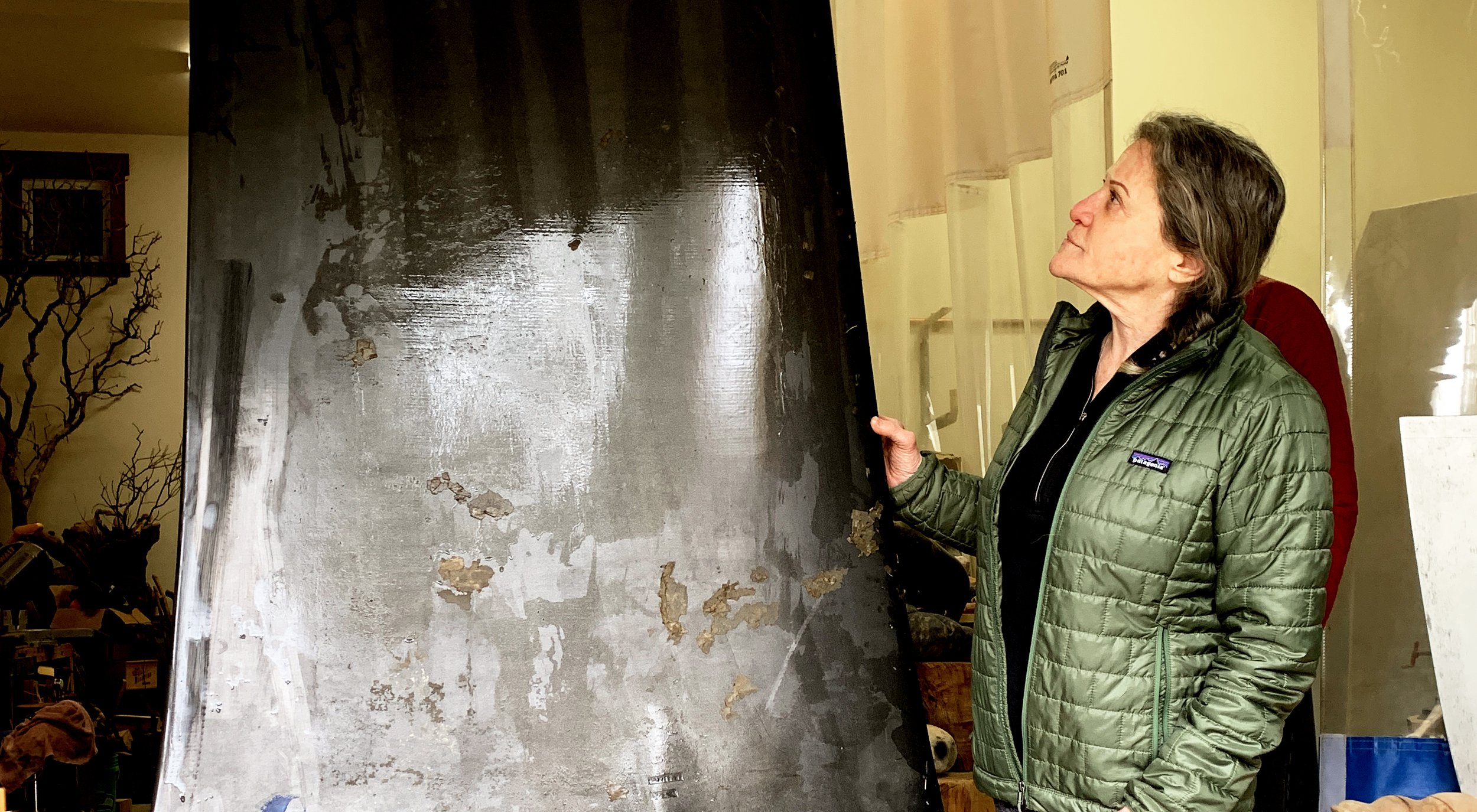
These iconic found objects are the fan blades manufactured for the failed Satsop Nuclear Power Plant Project in Elma, Washington in the late 1970s. I managed to salvage over 200 of these unused blades, thereby keeping over 40,000 pounds of fiberglass from ending up in the landfill and repurposing them into this innovative artist initiative.
I am making available these historically important pieces of history to artists to use as the building blocks for creative projects with profound impact.
— Jill Drllevich, Founder, Blades of Change
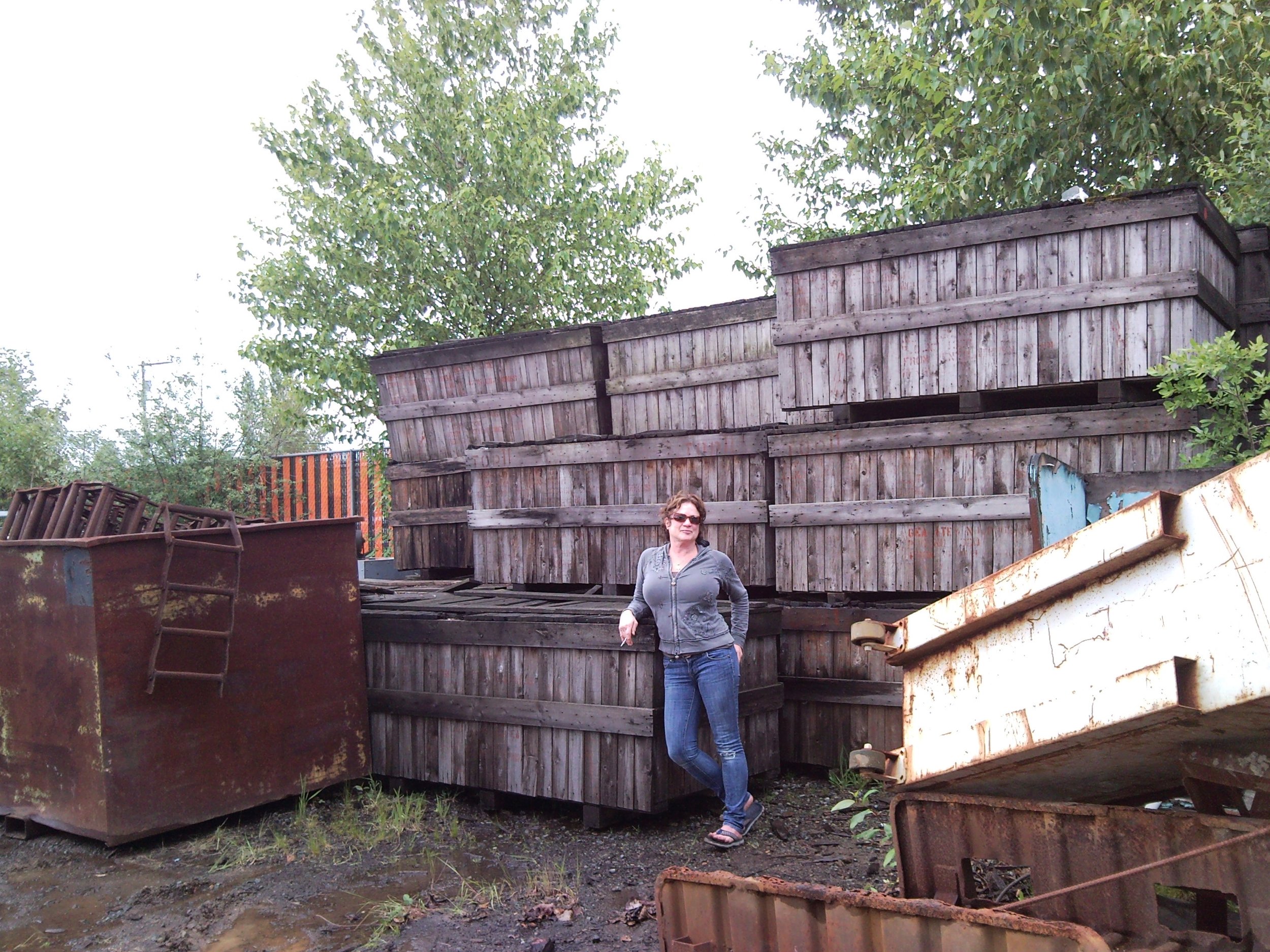
Jill Drllevich at Interwest Metals in Tacoma, where she originally found the nuclear fan blades.
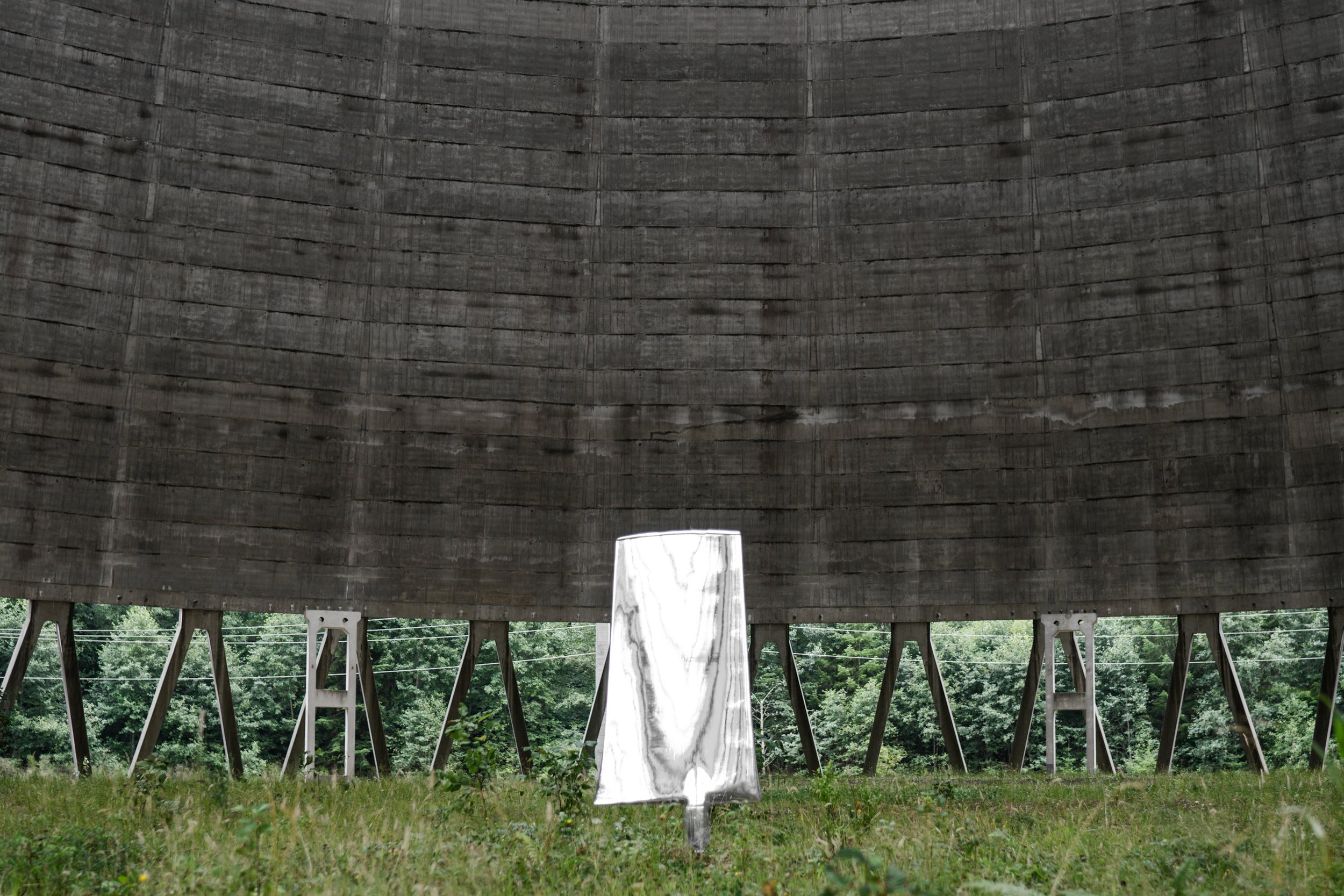
Chromed nuclear fan blade at Satsop Nuclear Power Plant site, Elma, Washington.
What Are the Blades?
The blades are fiberglass cooling tower fan blades originally manufactured for the Satsop Nuclear Power Plant in Elma, Washington. The plant was never completed — construction was halted in the 1980s, leaving behind over 200 unused fan blades.
Each blade is approximately 5.5 feet tall and weighs around 200 pounds. Jill Drllevich salvaged these blades from a metal recycler, diverting over 40,000 pounds of fiberglass from the landfill.
Today, these blades serve as the foundation for a growing body of artwork created by artists from diverse backgrounds, each bringing their own stories and perspectives to these historically significant objects.